Moroccan Cooking Class with Souk Market Tour
Visit a Marrakech souk with your chef to choose fresh produce and spices, then cook a full Moroccan menu with what you selected.
4.5 hours
2-10 people
From
View Details
€55
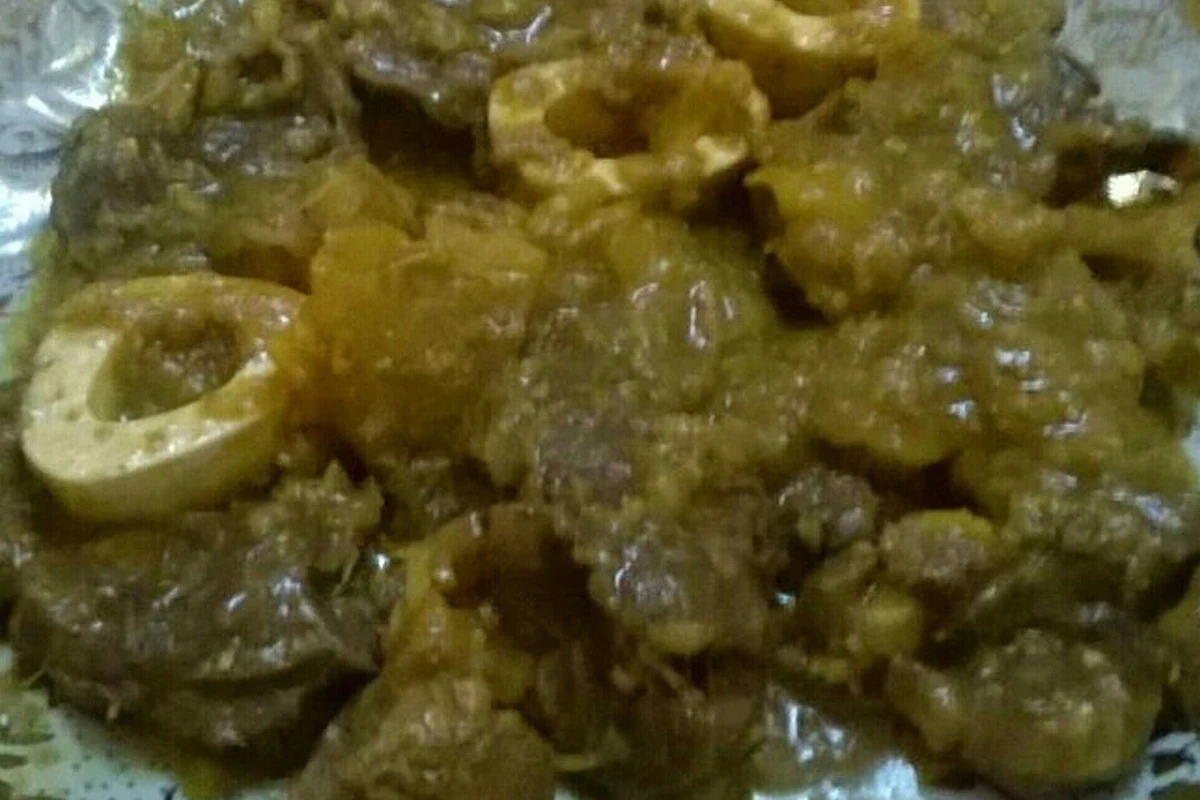
Marrakech's most iconic slow-cooked meat dish — tender beef or lamb infused with cumin, saffron, aged smen butter, and preserved lemons.
Prep
15 minutes
Cook
4 hours
Servings
4-6
Difficulty
Easy
Tanjia Marrakchia is the undisputed culinary emblem of Marrakech. Unlike tagines, which were traditionally cooked by women at home over charcoal braziers (kanoun), Tanjia is historically a bachelor’s and artisan’s dish prepared by the men who worked the souk stalls of the Medina.
Every Friday morning, Medina shopkeepers would gather meat, garlic, cumin, preserved lemons, saffron, and a spoonful of pungent smen, pack them into an amphora-shaped terracotta jar (tanjia), tie the top with butcher’s twine, and carry it to the farnatchi — the wood-fired furnace heating the neighborhood public bathhouse (hammam). There, the tanjia would sit nestled in the hot ashes for hours, slowly transforming into tender, gelatinous perfection.
The magic of Tanjia lies in its rustic minimalism: no onions, no complex herb bouquets, just the purest interplay of cumin, cured lemon, and gentle heat.
In a large mixing bowl, combine the beef pieces with the olive oil, smen, smashed garlic cloves, sliced preserved lemon peel, cumin, coriander, turmeric, Ras el Hanout, and steeped saffron water.
Mix thoroughly with your hands, massaging the spiced fat and aromatics into every cut of meat.
If using a traditional clay Tanjia urn: pack the meat tightly inside, pour all marinade liquids over it, cover the mouth with parchment paper followed by butcher paper or foil, and tie tightly around the neck with cooking twine. Poke 2-3 small steam holes with a toothpick.
If using a Dutch oven or heavy clay pot at home: place the meat and all marinade inside, cover tightly with foil, then fit the lid snugly over the foil.
Slow bake in an oven preheated to 150°C (300°F) for 3.5 to 4 hours, or until the meat is fork-tender and gelatinous.
To finish, uncover and increase heat to 200°C (400°F) for 10 minutes if you prefer a lightly caramelized surface with reduced, glistening sauce.
Pour straight from the urn onto a shallow platter and serve steaming hot with fresh crusty Moroccan khobz.
Yes. A heavy cast-iron Dutch oven or a slow cooker replicates the enclosed, gentle braising environment of the clay urn very effectively. Ensure the lid forms a tight seal so the juices concentrate.
Smen is Moroccan aged, salted fermented butter with a distinctive pungent, cheesy depth. If you cannot find smen, use good quality salted ghee, European butter, or a teaspoon of blue cheese mixed with clarified butter.
Visit a Marrakech souk with your chef to choose fresh produce and spices, then cook a full Moroccan menu with what you selected.
€55
Learn how to prepare traditional Moroccan dishes with a local chef in Marrakech. A hands-on 3-hour class covering tagine, salads and mint tea.
€45
A private Moroccan cooking class for couples, families and small groups, with a menu tailored to your taste and pace.
€75