Moroccan Pastry & Mint Tea Workshop
A hands-on workshop for Moroccan sweets and the ritual of mint tea — learn to make briouats, ghriba and a proper pot of Moroccan tea.
2.5 hours
2-12 people
From
View Details
€40
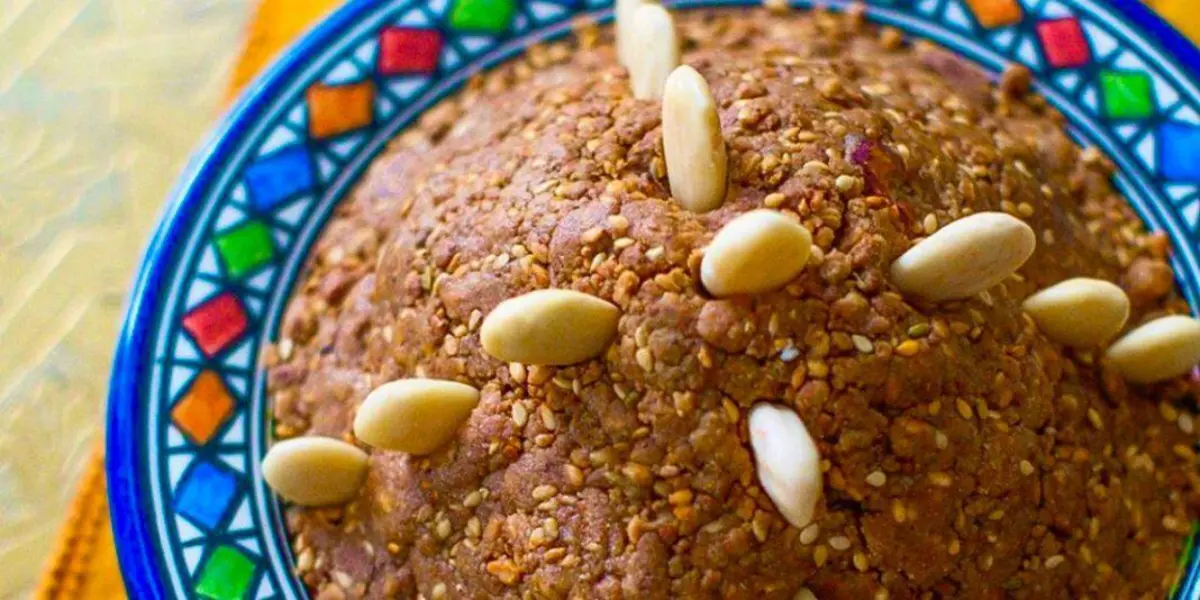
A rich, unbaked Moroccan energy confection of slow-toasted golden flour, toasted sesame seeds, fried almonds, warm spices, pure honey, and clarified butter.
Prep
1 hour
Cook
30 minutes
Servings
10-12 servings
Difficulty
Medium
Sellou (also known as Sfouf or Taqnata) is one of Morocco’s oldest and most unique confectionery traditions. Unlike baked cakes or fried pastries, Sellou is an unbaked, densely nutritious blend of slow-toasted wheat flour, finely ground almonds, roasted sesame seeds, warm spices, and fragrant mountain honey.
Rich in healthy fats, protein, and warming botanical aromatics like fennel, anise, and mastic gum, Sellou is packed into decorative pyramids and served by the spoonful at Ramadan sunsets and post-natal celebrations.
Toast the flour: Place the 500g flour on a wide baking sheet. Bake in an oven at 180°C (350°F) for 25-30 minutes, stirring every 5 minutes, until evenly toasted to a rich golden caramel hue. Sift twice through a fine sieve to remove any toasted lumps.
Prep the sesame seeds: Toast the clean sesame seeds in a dry pan until fragrant and popping. Set aside 1 cup of whole toasted seeds for texture; finely grind the rest in a food processor until it releases its oils and becomes a smooth paste.
Prep the almonds: Fry the blanched, dried almonds in neutral oil until golden. Reserve 1/2 cup whole fried almonds for garnish. Pulse half the remaining almonds into a coarse crunchy crumb, and grind the other half into a fine oily paste (*praline* style).
Combine dry ingredients: In a very large basin (*gsaa*), thoroughly mix the sifted toasted flour, ground sesame paste, whole sesame seeds, crushed almonds, ground aniseed, fennel seed, cinnamon, nutmeg, mastic gum, salt, and sifted icing sugar.
Bind the mixture: Make a well in the center. Pour in the warm honey, melted clarified butter, and reserved warm almond oil.
Kneading (*Dalk*): Vigorously knead and rub the mixture between your open palms for 10-15 minutes. The warmth and pressure of your hands will draw out natural oils from the sesame and almonds, turning the mixture from crumbly sand into a cohesive, moist, packable texture.
Shape and present: Pack firmly into a decorative dome or pyramid on a traditional serving platter. Decorate with geometric patterns of whole fried almonds and a dusting of powdered sugar. Serve in small dessert bowls with spoons alongside hot Moroccan mint tea.
Sellou is prepared in every Moroccan household for the month of Ramadan to provide sustaining nutrition, and is traditionally made for new mothers after childbirth to restore energy and vitality.
These names often refer to the same confection across Moroccan regions; Sfouf generally refers to a slightly looser crumbly texture, whereas Zamita often includes toasted barley flour or wild herbs.
A hands-on workshop for Moroccan sweets and the ritual of mint tea — learn to make briouats, ghriba and a proper pot of Moroccan tea.
€40
Learn how to prepare traditional Moroccan dishes with a local chef in Marrakech. A hands-on 3-hour class covering tagine, salads and mint tea.
€45