Moroccan Pastry & Mint Tea Workshop
A hands-on workshop for Moroccan sweets and the ritual of mint tea — learn to make briouats, ghriba and a proper pot of Moroccan tea.
2.5 hours
2-12 people
From
View Details
€40
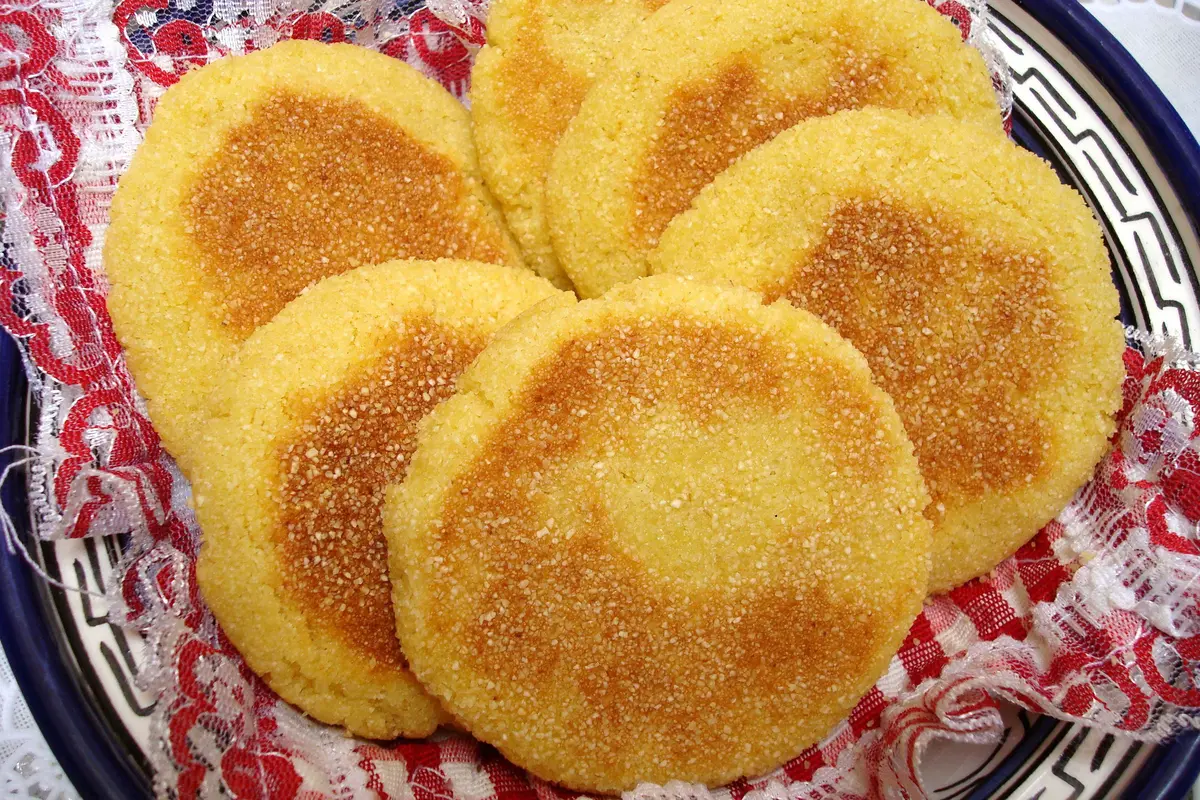
A tender, buttery Moroccan semolina pan bread with a crisp, crumbly golden crust, traditionally enjoyed warm with fresh cheese, butter, and honey.
Prep
15 minutes
Cook
15 minutes
Servings
6-8 mini rounds or 1 large bread
Difficulty
Easy
Harcha (derived from the Moroccan Arabic word harch, meaning “rough” or “textured”) is Morocco’s beloved pan-toasted semolina bread. With its distinct sandy, golden-crusted exterior and soft, buttery interior, it holds a cherished place at afternoon tea-time (casse-croûte) and breakfast.
Unlike leavened wheat breads, Harcha relies on durum semolina rubbed with butter and olive oil, cooked on a dry cast-iron skillet rather than in an oven. Sliced horizontally while still warm, it provides the ultimate canvas for sweet honey, melted butter, or savory fresh mountain goat cheese (jben).
In a wide mixing bowl, combine the 400g semolina, sugar, salt, baking powder, and yeast. Whisk together.
Pour in the melted butter and olive oil. Using your fingertips, rub the fat into the dry semolina (*sabler*) for 2 minutes until every grain is coated and looks like wet sand. Reserve 3 tablespoons of this buttery semolina mixture for dusting.
Add the milk (or lukewarm water) to the remaining bowl. Mix very gently with your fingertips just until the liquid is absorbed into a soft, wet dough (do NOT knead — kneading develops gluten and makes Harcha tough rather than tender and crumbly).
Let the mixture rest for 5 minutes so the semolina absorbs the moisture and firms up into a workable mass.
Sprinkle a clean surface with the reserved buttery semolina. Turn the dough out and pat it gently to an even thickness of about 1 cm (1/2 inch).
Use a round cookie cutter (about 7-8cm) to stamp out mini rounds, or leave as one large round loaf. Dust the top and sides of each round with additional dry semolina.
Heat a dry heavy cast-iron skillet, crepe pan, or Moroccan griddle (*makla*) over medium-low heat.
Place the Harcha rounds on the dry hot pan. Cook gently over medium-low heat for 6-8 minutes until the underside is deep golden and firm.
Carefully flip and cook the other side for another 5-6 minutes until golden and cooked through to the center.
Transfer to a bread basket and serve warm with butter, honey, jams, or fresh goat cheese.
If the dough is too dry, it can crumble when flipped. Allow the semolina to absorb enough milk, and gently press the edges together when stamping out rounds.
Harcha is best served hot off the pan, but leftovers can be revived in a toaster or dry skillet for 1-2 minutes until warm and crisp.
A hands-on workshop for Moroccan sweets and the ritual of mint tea — learn to make briouats, ghriba and a proper pot of Moroccan tea.
€40
Learn how to prepare traditional Moroccan dishes with a local chef in Marrakech. A hands-on 3-hour class covering tagine, salads and mint tea.
€45