Moroccan Pastry & Mint Tea Workshop
A hands-on workshop for Moroccan sweets and the ritual of mint tea — learn to make briouats, ghriba and a proper pot of Moroccan tea.
2.5 hours
2-12 people
From
View Details
€40
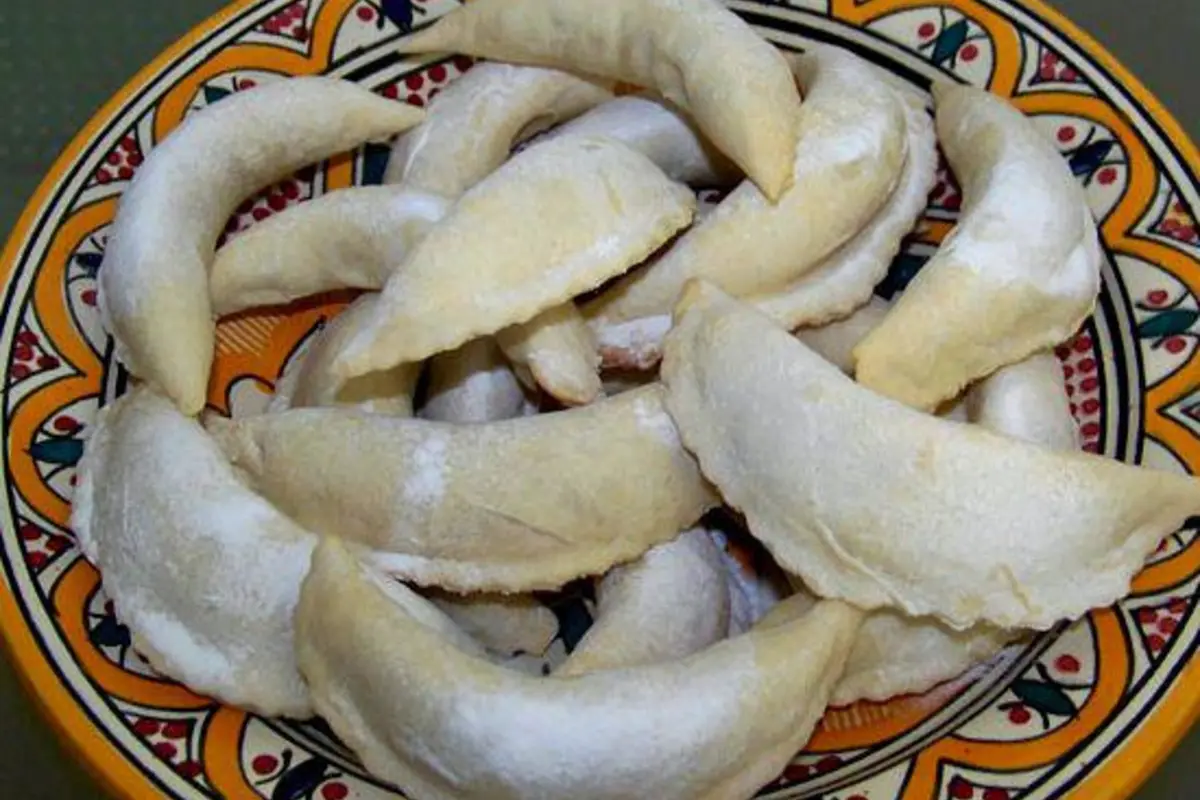
Morocco's most refined pastry: delicate, translucent crescent-shaped pastries filled with orange blossom-scented almond paste and a hint of cinnamon.
Prep
1 hour
Cook
15 minutes
Servings
24 pastries
Difficulty
Advanced
Kaab el Ghazal (Cornes de Gazelle or Gazelle Horns) represents the pinnacle of Moroccan pastry making. Served at royal receptions, weddings, and Eid celebrations, this crescent-shaped confectionery demands patience, precision, and a delicate touch.
Inside the paper-thin, translucent pastry shell is a luscious, aromatic filling made from freshly ground almonds, Moroccan orange blossom water, cinnamon, and wild mastic gum. When baked correctly, the pastry remains pale and tender while the almond core stays melt-in-your-mouth soft.
Make the almond paste: In a food processor, finely grind the blanched almonds with the sugar until a smooth, workable paste forms. Transfer to a bowl and knead in the softened butter, orange blossom water, cinnamon, and crushed mastic gum until pliable and non-sticky. Shape into 24 small finger-sized logs (cigar shapes) with tapered ends.
Make the dough: In a mixing bowl, combine sifted flour, pinch of salt, melted butter, egg yolk, and orange blossom water. Gradually add warm water while kneading for 10 minutes until you have a smooth, elastic, and non-sticky dough. Wrap tightly in plastic wrap and let rest for 30 minutes.
Rolling the dough: Cut the dough into 4 portions. Roll one portion out on a lightly floured surface (or through a pasta roller) until paper-thin and translucent (you should almost see your countertop through it).
Shaping the horns: Place an almond paste log on the rolled dough near the bottom edge. Fold the dough over the almond log to cover it. Use your fingers to press the dough snugly around the almond paste, expelling all air bubbles.
Pinch and curve the paste upwards into a crescent shape (*Kaab*), tapering both ends while keeping the center plump. Use a fluted pastry wheel (jarara) to cut along the outer curved edge, leaving a neat 2mm decorative seam.
Prick each pastry 3-4 times on the underside and sides with a thin sterilized sewing needle to allow steam to escape during baking without bursting the delicate crust.
Arranging & drying: Place the shaped horns on a parchment-lined baking sheet. Leave them to dry at room temperature uncovered for 6 to 12 hours (or overnight) so the skin firms up and holds its shape.
Baking: Preheat oven to 160°C (320°F). Brush the pastries lightly with melted butter. Bake for 12-15 minutes on the middle rack until the pastry is set and the base is very light golden, while the exterior remains elegant off-white (never over-brown a gazelle horn!).
Let cool completely on the tray before handling. Serve with freshly brewed Moroccan mint tea.
'Kaab el Ghazal' translates literally from Moroccan Arabic to 'Ankles of the Gazelle', referring to their elegant, slender tapered curves resembling the grace of a gazelle.
You can use fine almond flour in a pinch, but grinding fresh blanched almonds with sugar yields the traditional silky, chewy texture that store-bought almond meal lacks.
A hands-on workshop for Moroccan sweets and the ritual of mint tea — learn to make briouats, ghriba and a proper pot of Moroccan tea.
€40
Learn how to prepare traditional Moroccan dishes with a local chef in Marrakech. A hands-on 3-hour class covering tagine, salads and mint tea.
€45